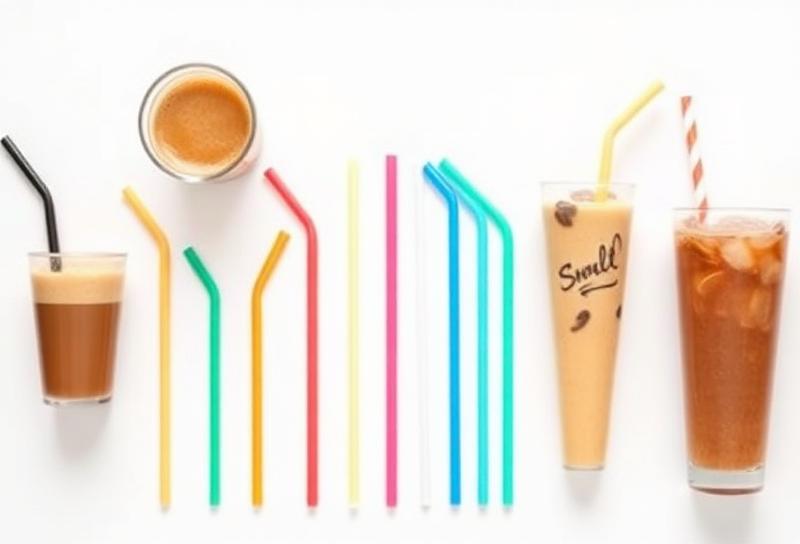
From espresso cocktails to boba teas, every drink needs the right straw. Our sizing guide helps café owners pick the perfect fit.
Straw sizing is one of those decisions that seems trivial until it goes wrong. Too narrow and a smoothie is unpullable. Too long and a short cocktail looks ridiculous. Too short and it disappears into a tall glass of ice. Most complaints about eco straws are actually complaints about the wrong straw for the drink.
Here is how to work out what your menu needs, using the four sizes that cover almost every café and venue in Australia.
The two numbers that matter
Every straw is described by diameter and length. Diameter determines what can pass through it and how hard the customer has to work. Length determines whether it sits properly in the glass — ideally it clears the rim by two to three centimetres so it can be gripped, without towering over a short tumbler.
Get diameter wrong and the drink is unusable. Get length wrong and the drink just looks unconsidered. Both are worth five minutes of thought.
Regular: 6mm × 200mm
This is the workhorse and it will cover the majority of your volume. Iced coffee, iced tea, soft drink, water, juice, cold brew — anything thin enough to pull without effort, served in a standard 350ml to 500ml cup. If you only stock one straw, stock this one. Cases are 2,500 pieces at $70 or 5,000 at $135.
Cocktail: 6mm × 140mm
Same diameter, shorter body. The cocktail straw exists because a 200mm straw in a 200ml glass looks wrong and gets in the customer's face. Use it for espresso martinis, spritzes, short mixed drinks, tasting-size servings, and any glass under about 250ml. Bars that swap to short straws for short drinks immediately look more deliberate. Cases are 2,500 at $55 or 5,000 at $110.
Jumbo: 8mm × 200mm
The 2mm increase in diameter sounds small and changes everything. Cross-sectional area scales with the square of the radius, so an 8mm straw moves substantially more liquid per pull than a 6mm one. That is the difference between a drinkable thickshake and a frustrated customer.
Use jumbo straws for smoothies, thickshakes, frappés, blended fruit drinks and anything with pulp. If your blender is involved, this is your straw. Cases are 2,500 at $100 or 5,000 at $195.
Bubble tea: 12mm × 220mm
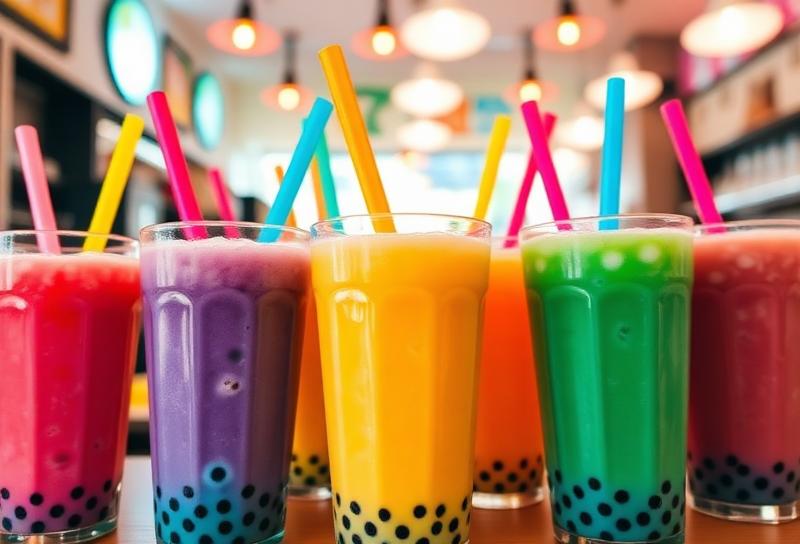
Boba is a separate category, not a variation. Tapioca pearls are typically 8 to 10mm, so nothing narrower than 12mm will pass them reliably. The extra length accounts for the taller cups bubble tea is served in and the fact that the pearls sit at the bottom.
These come in cases of 1,800 — $160 unwrapped, or $165 individually wrapped. The wrapped version is worth the extra when straws sit on an open counter, when you are serving at events or markets, or when your customers simply expect it.
Building your order
Most cafés end up with two SKUs and most venues with three. A practical starting point:
- Espresso bar or coffee-led café: regular, plus cocktail if you serve short cold drinks.
- Café with a blender: regular plus jumbo.
- Restaurant or bar: regular plus cocktail.
- Bubble tea shop: bubble tea straws as the primary line, plus regular for anything without pearls.
- Venue doing all of the above: regular, jumbo and bubble tea, with cocktail for the bar.
Ordering volume without over-committing
A rough way to estimate: count the cold drinks you sell in an average week, multiply by 52, and divide by the case size. Then round down for your first order. It is far better to reorder in six weeks than to discover you have four pallets of the wrong length.
All sizes ship Australia-wide through the One World Courier network — three to seven business days standard, or one to three express — with freight quoted live at checkout and charged at cost. Every size is TUV certified compostable, breaks down within 90 days in commercial composting, and is PFAS-free.
If you would rather not guess, send your drinks list to [email protected] and we will tell you which sizes we would put behind your counter.