Not all boba straws are equal. We cover diameter, material, and ordering tips for bubble tea businesses switching to sustainable options.
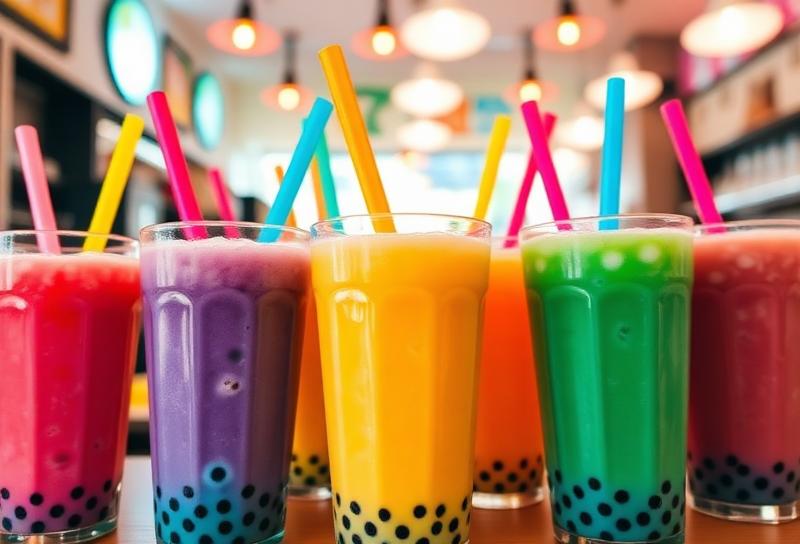
Bubble tea is the hardest test a straw can face. It has to be wide enough to pass tapioca pearls, rigid enough to punch through a sealed film lid, and stable enough to survive twenty minutes in a cold, sweet, milky drink while the customer works through the pearls at the bottom. A straw that manages three out of four is a straw that generates complaints.
If you run a bubble tea shop and you are moving away from plastic, here is what actually matters.
Diameter is not negotiable
Tapioca pearls are typically 8 to 10mm once cooked. A 12mm straw passes them comfortably; anything narrower jams, and a jammed straw means a customer trying to force pearls through a blockage. Our bubble tea straws are 12mm × 220mm for exactly this reason.
Do not be tempted to make an 8mm jumbo straw work. It handles smoothies well and it will not handle boba. This is the most common mistake we see from venues trying to consolidate down to one SKU.
Length matters more than people expect
Bubble tea cups are taller than standard cold-drink cups, and the pearls sit at the bottom. At 220mm the straw reaches the base with enough left above the rim to grip properly. A shorter straw either will not reach the pearls or leaves the customer fishing for the end of it, and it looks wrong in the cup.
Rigidity and the sealed lid
If you use a film sealer, your straw is also a tool. It has to be stiff enough to pierce the film cleanly without buckling or splitting. This is where paper boba straws most often fall over — a wound paper tube of that diameter tends to crumple at the tip rather than punch through.
Sugarcane straws are moulded from bagasse into a dense wall rather than wound from layers, so there is no seam and no adhesive line. That structure is what gives a wide straw the stiffness to get through a film lid and hold its shape afterwards.
Wrapped or unwrapped
Both are legitimate choices and it depends on your service model. We offer bubble tea straws either way, in cases of 1,800 — $160 unwrapped or $165 individually wrapped.
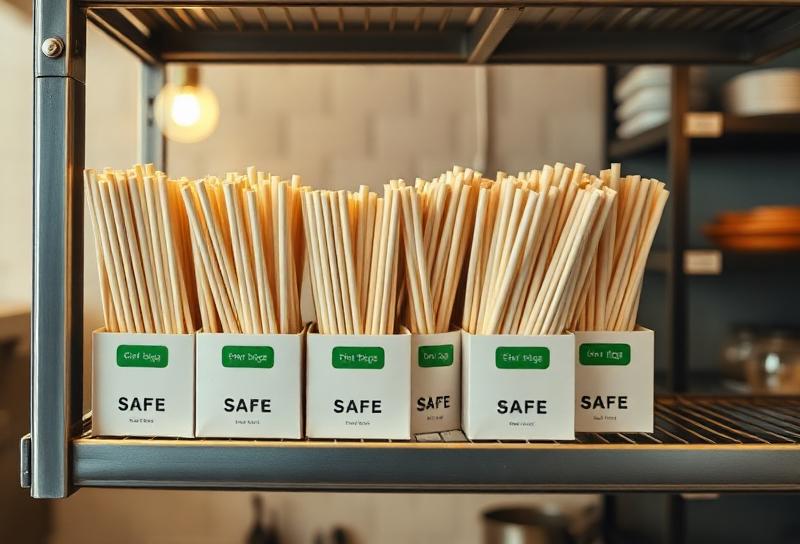
Choose individually wrapped when straws are handled by customers rather than staff, when you trade at markets or events without a controlled counter environment, or when your customers simply expect a wrapped straw. It is a small premium for a clear hygiene story.
Choose unwrapped when straws are dispensed by staff behind the counter, when you want to reduce packaging, and when you can keep them in a covered dispenser rather than an open carton.
Material: what to ask a supplier
The market for boba straws filled up fast, and the wide diameter magnifies material weaknesses. Ask three questions:
- Is it certified compostable, and by whom? Ours are TUV certified compostable and break down within 90 days in commercial composting conditions.
- Is it PFAS-free? Fibre food-service products have historically sometimes used fluorinated moisture barriers. Ours are PFAS-free.
- How long does it hold up submerged in a cold milk tea? Ask for a sample and time it yourself with a real drink, not water.
That last test is the one that separates products. A boba drink is consumed slowly by design — the pearls are the point — so a straw that softens after ten minutes fails in ordinary use.
Working out your order volume
Bubble tea is close to one straw per cup, which makes forecasting unusually simple. Count cups sold in an average week, multiply by 52, divide by 1,800, and that is your annual case count.
A shop selling 400 cups a week gets through roughly 20,800 straws a year — around twelve cases. A shop selling 1,000 cups a week is closer to thirty cases. Order for a quarter at a time if your store room is dry, and set a reorder point at two cases so you are never buying in a hurry before a hot weekend.
Storage in a boba shop
Bubble tea shops are warm and often humid — ice, steam from tea brewing, and a lot of washing. Keep cases sealed and away from the sink and brewing area, decant into a covered dispenser at the counter, and refill from a sealed case rather than leaving a carton open. Wrapped straws are more forgiving here if your storage is not ideal.
Rounding out the range
Most bubble tea shops need a second size. If you sell fruit teas, iced teas or anything without pearls, a regular 6mm × 200mm straw is a better experience than handing over a 12mm boba straw — cases are $70 for 2,500 or $135 for 5,000. If you also make smoothies, the 8mm × 200mm jumbo covers those.
Everything ships Australia-wide through the One World Courier network, typically three to seven business days standard and one to three express. Freight is quoted live at checkout from the carrier's real rates for your address and charged at cost, and free warehouse pickup is available. If you want a sample case to run through a weekend before committing, email [email protected].