Warm, humid trade is the hardest test a fibre straw faces. What Brisbane humidity does to paper and bagasse straws, and how to store them so they hold up.
It is the first question Brisbane operators ask about any fibre straw, and it is the right one. A straw that performs in an air-conditioned Melbourne wine bar has not really been tested; a straw that performs in an open-air courtyard in West End in February has. This guide covers what warmth and humidity actually do to a straw, which materials cope, and the storage habits that make the difference between a case that performs and a case that disappoints.
Queensland moved on single-use plastics early, so there is a useful body of experience to draw on here: venues along the river precincts, through West End and out to the Gold Coast have now tried paper, tried plastic-look alternatives, and mostly settled on sugarcane. Climate, not just compliance, is why.
Humidity is the real test
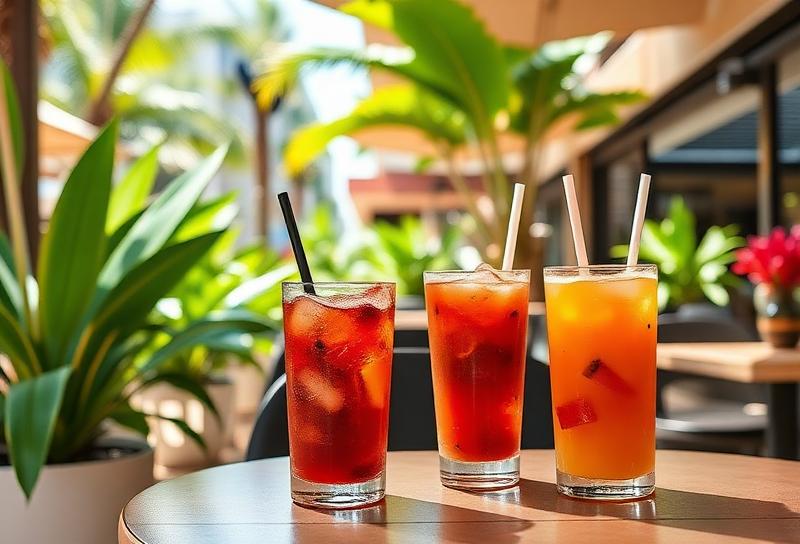
A paper straw in an air-conditioned Melbourne wine bar and a paper straw in an open-air Brisbane courtyard in February are not the same product. Warmth and humidity accelerate the softening that makes paper unpopular in the first place. Add ice, condensation on the outside of the glass and a customer who is in no hurry, and the failure point arrives well before the drink is finished.
Sugarcane straws are made from bagasse — the fibre left after sugarcane stalks are pressed for juice. The material is moulded into a dense, rigid wall rather than wound from thin layers of paper, so there is no seam to unravel and no adhesive line to soften. In practice that means the straw is still a straw at the bottom of the glass, which is the entire specification most operators actually care about.
Certified compostable, not just marketed as green
Queensland has a growing commercial composting sector, and the point of a compostable straw is that it can actually enter that stream. Our straws are TUV certified compostable and break down within 90 days under commercial composting conditions. They are also PFAS-free — worth confirming with any moulded-fibre food-service product, because fluorinated compounds have historically been used in this category as a moisture barrier.
Certification matters for a second reason: it is what you point at when a customer, a council officer or a corporate client asks. A claim on a carton is not evidence. A certification is.
Sizing for a Queensland drinks list
Brisbane menus skew cold. Iced coffee, frozen drinks, smoothies and bubble tea carry a much larger share of trade here than in the southern capitals, and that changes which straws you need on the shelf.
- Regular 6mm × 200mm — iced coffee, soft drink, water. The default for most of service.
- Cocktail 6mm × 140mm — short glasses, spritzes, espresso martinis, tasting-size drinks.
- Jumbo 8mm × 200mm — smoothies, thickshakes and anything a standard straw cannot pull.
- Bubble tea 12mm × 220mm — the only size that reliably passes tapioca pearls. Available unwrapped or individually wrapped.
If your venue sells frozen or blended drinks in volume, the jumbo is not optional. Handing a customer a 6mm straw for a thickshake creates a complaint that has nothing to do with sustainability.
Where to buy them in Brisbane
If the humidity question is settled for you and what you actually need now is cases on a pallet, that sits one level up from this guide: our Brisbane straws page has the full size range, bulk case pricing and delivery windows into Brisbane and South East Queensland. That is the page to order from.
For context while you are still comparing: cases start at $55 for 2,500 cocktail straws and $70 for 2,500 regular straws, and we ship Australia-wide through the One World Courier network — three to seven business days standard into South East Queensland, or one to three express. Freight is quoted live at checkout and charged at cost.
Storing straws in a humid climate
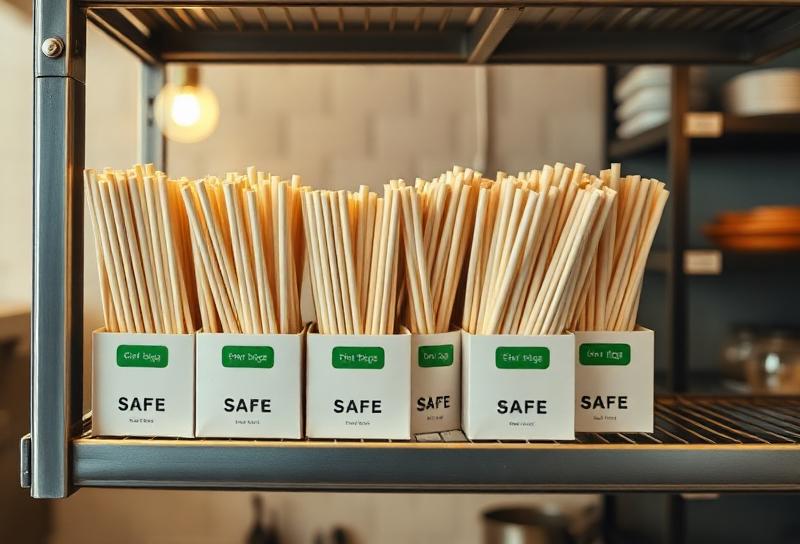
One Queensland-specific tip: how you store the boxes matters. Keep cases sealed until you need them, off the floor, out of direct sun and away from the dish pit or any other source of steam. Sugarcane straws are dense and durable, but no fibre product benefits from sitting open in a humid store room for a month. Decant into a covered dispenser at the counter and refill from a sealed case rather than leaving a carton open behind the bar.
Making the switch
The practical path is to order one case of your highest-volume size, run it through a full week including a busy weekend, and ask your floor staff — not just yourself — whether anyone complained. That is the only test that matters.
If you want help working out which sizes suit your menu and what volume to start with, email [email protected] with a photo of your drinks list and we will come back with a suggestion.