An unbiased look at the three most popular biodegradable straw options — cost, durability, composting, and customer experience compared.
We sell sugarcane straws, so treat this article with the scepticism it deserves. What follows is a genuine attempt at a fair comparison, including the places where sugarcane is not the obvious answer. If you only want the conclusion: paper wins on price, PLA wins on looking like plastic, and sugarcane wins on holding up in the glass.
Paper
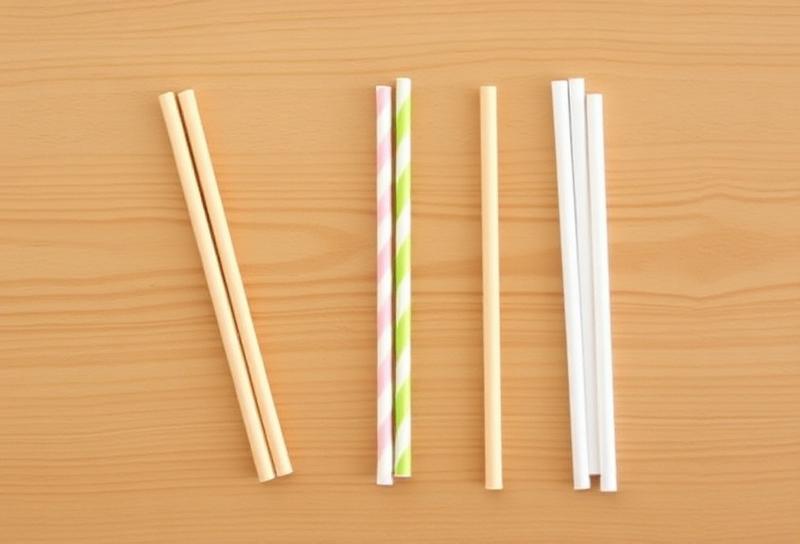
Paper straws are wound from layers of paper bonded with adhesive. They were the first mass replacement for plastic because the manufacturing base already existed and they are cheap.
What they do well: lowest unit cost of the three, widely available, and made from a renewable material that most people intuitively understand as compostable.
Where they struggle: longevity in liquid. Because a paper straw is thin layers wound around a seam, prolonged contact with a drink softens the wall and can loosen the bond. In a drink finished in five minutes this is a non-issue. In an iced coffee someone nurses for forty minutes, or a cocktail across a long dinner, it is the whole issue. Some drinkers also report a papery taste, particularly in tea and clear spirits.
Best suited to: high-turnover service where drinks are consumed quickly, and price-sensitive high-volume operations such as events and festivals.
PLA (polylactic acid)
PLA is a bioplastic, usually made from fermented corn or sugarcane starch. It is a genuine polymer, just derived from plants rather than petroleum, and it can be extruded into a straw that looks and feels almost exactly like the plastic one it replaced.
What it does well: the customer experience is essentially identical to conventional plastic. Clear, smooth, no taste, no softening. It is also available in flexible and printed formats that fibre products cannot easily match.
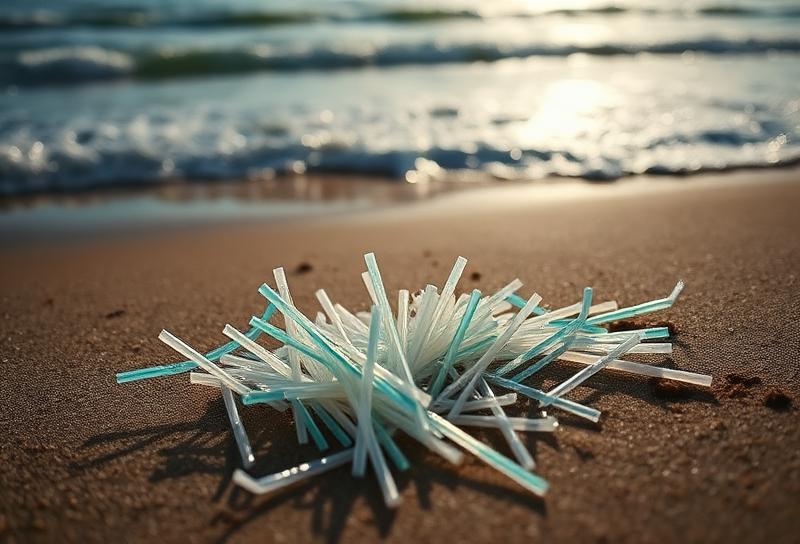
Where it struggles: end of life, and regulation. PLA requires industrial composting conditions — sustained elevated temperature — to break down. In a home compost bin, in landfill or in the ocean it behaves much more like conventional plastic than most buyers assume. It also contaminates conventional plastic recycling streams, and it is visually indistinguishable from plastic, which means some jurisdictions have restricted it and some customers will assume you are simply still using plastic.
Best suited to: venues with confirmed access to an industrial composting collection, where a plastic-like feel is genuinely important.
Sugarcane bagasse
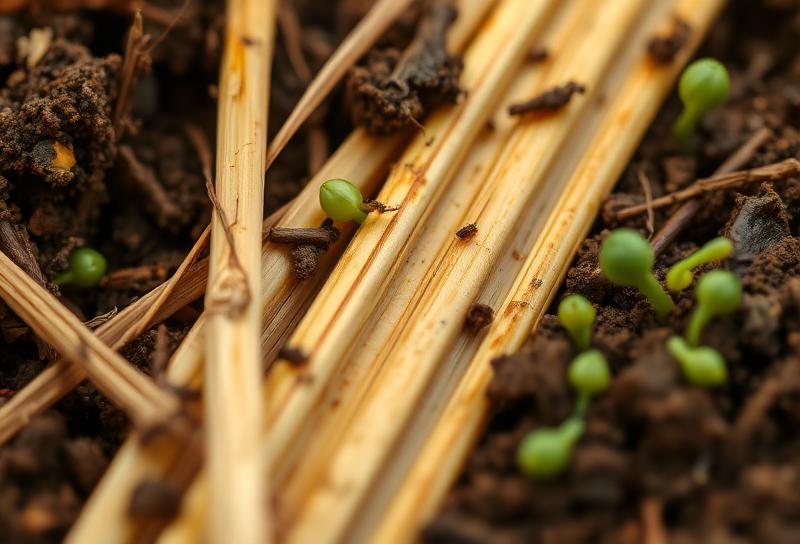
Sugarcane straws are moulded from bagasse, the fibre left after sugarcane is pressed for juice. Rather than winding thin layers, the material is formed into a dense wall.
What it does well: durability. Ours hold their shape in cold and hot drinks for hours, with no seam to unravel. Because it is plant fibre rather than a polymer, it composts on the same terms as other organic material — ours are TUV certified compostable and break down within 90 days in commercial composting conditions, and they are PFAS-free. The raw material is an existing agricultural by-product rather than a crop grown for the purpose.
Where it struggles: unit cost sits above paper. The finish is matte and fibrous rather than glossy, which some brands like and some do not. And like every fibre product, it does not offer a flexible bend.
Best suited to: cafés, restaurants, bars and bubble tea shops where drinks are consumed slowly and a straw failing mid-drink is a real service problem.
Side by side
- Durability in liquid: sugarcane and PLA hold up for hours. Paper is the weak point.
- Unit cost: paper lowest, sugarcane mid, PLA typically highest.
- Taste neutrality: PLA and sugarcane are neutral. Paper can impart flavour.
- End of life: sugarcane and paper are plant fibre and compost readily in commercial conditions. PLA needs industrial composting specifically and is not home-compostable in practice.
- Regulatory risk: paper and sugarcane are broadly accepted. PLA is restricted in some jurisdictions — check locally.
- Customer perception: PLA looks like plastic, which is both its strength and its problem.
How to actually decide
Answer two questions honestly. First: how long does a typical customer take to finish a drink at your venue? If the answer is under ten minutes, paper is viable and you will save money. If drinks sit for half an hour or more, paper will generate complaints and the saving evaporates.
Second: do you have confirmed access to an industrial composting stream? If yes, PLA becomes a legitimate option. If no, PLA is a plant-derived plastic going to landfill, and a fibre straw is the better environmental choice.
For most Australian cafés and venues — drinks consumed at a leisurely pace, no guaranteed industrial composting collection — sugarcane is the option that fails least often. That is not a dramatic claim, but reliability is the honest reason it has become the default.
Whatever you choose, order a sample case and run it through real service before you commit. If you want to test ours, email [email protected].