
From straws to takeaway containers, compostable packaging is the future. Here's everything Australian businesses need to know to get started.
Compostable packaging is one of those categories where the vocabulary is doing a lot of work and not all of it is honest. If you are an Australian business trying to move off single-use plastic without buying something that turns out to be marketing, this guide covers the terminology, the standards, the practical questions to ask suppliers, and the one factor most buyers overlook.
Start with the words
Three terms get used as though they mean the same thing. They do not.
- Degradable means only that a material breaks into smaller pieces. Conventional plastic qualifies. It tells you nothing useful.
- Biodegradable means microorganisms can consume the material, with no stated timeframe or conditions. A biodegradable claim with no number attached is close to meaningless — given long enough, almost everything is biodegradable.
- Compostable means the material converts to carbon dioxide, water and biomass within a defined period under defined conditions, disintegrates so no recognisable fragments remain, and leaves compost that is safe for plant growth. This is the only one of the three backed by testable standards.
If a supplier uses the first two words and avoids the third, that is information.
The Australian standards
Two standards do most of the work here. AS 4736 covers industrial or commercial composting — the elevated temperatures, controlled moisture and active aeration of a managed facility. AS 5810 covers home composting, which is a considerably harder test because a backyard heap is cooler, drier and less microbially active.
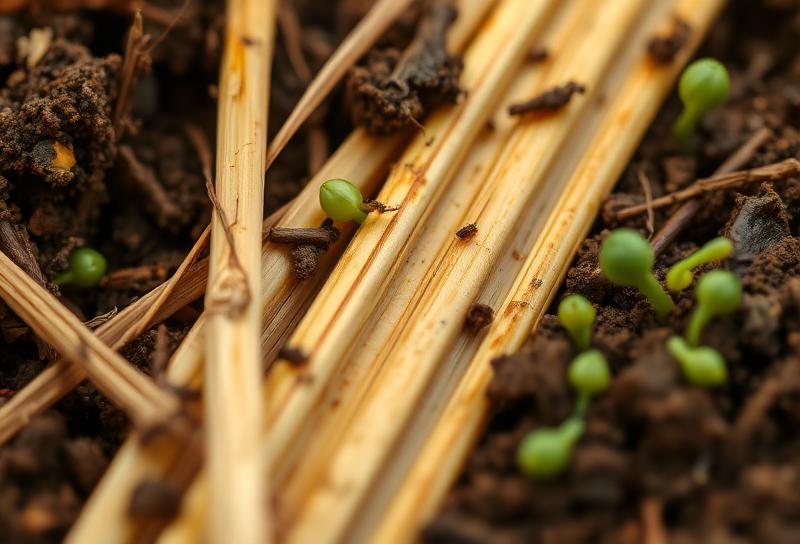
A product certified to AS 5810 will compost at home. A product certified only to AS 4736 needs a commercial facility. Both are legitimate; they are just answers to different questions. You will also encounter international certifications — TUV certification is common and widely recognised. Our sugarcane straws are TUV certified compostable and break down within 90 days in commercial composting conditions.
The right question to a supplier is never "is this compostable?" It is "which standard, which certifier, and can I see it?"
The factor most buyers overlook
Here is the uncomfortable part: compostable packaging only delivers its environmental benefit if it actually reaches a composting stream. A certified compostable container in a general waste bin goes to landfill, where it breaks down slowly in low-oxygen conditions and delivers a fraction of the intended benefit.
So before you rebuild your packaging line, make one phone call: ask your waste contractor or council whether commercial organics collection is available at your address, and whether it accepts certified compostable food-service packaging. Some organics streams accept food waste only. The answer determines how much of your investment is actually realised.
If organics collection is not available, compostable fibre packaging is still the better choice — it is plant material rather than persistent plastic — but be honest with yourself and with customers about what happens to it.
PFAS: ask every fibre supplier
Moulded fibre food-service products — bowls, clamshells, plates, straws — have historically sometimes used per- and polyfluoroalkyl substances as a grease and moisture barrier. PFAS do not break down in composting. They persist, and they end up in the finished compost and from there in soil.
This means a product can be certified compostable in the sense that the fibre disappears while still carrying additives you would not want spread on farmland. Ask every fibre supplier, in writing, whether their product is PFAS-free. Ours are.
Working through your packaging list
A practical order of attack, roughly by ease of substitution:
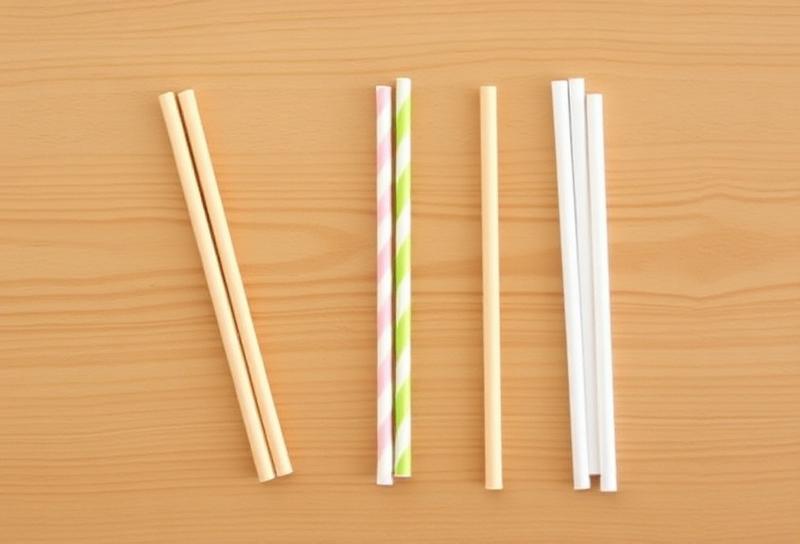
- Straws and stirrers. The simplest swap, with mature plant-fibre alternatives. Sugarcane bagasse straws are the common choice for venues where drinks are consumed slowly.
- Cutlery. Wood and moulded fibre alternatives are well established.
- Plates, bowls and clamshells. Moulded bagasse is widely available; check PFAS and check whether the item needs to hold liquid or hot oil.
- Cups. Harder, because a cup needs a waterproof lining. Check what the lining is and whether it is included in the certification.
- Films and bags. Hardest, and the category where degradable claims are most often misleading.
Do not try to change everything in one month. Substituting one category at a time lets you catch problems before they are pallet-sized.
What to ask before you commit to volume
- Which standard is it certified to, by which certifier, and what is the certificate number?
- Is it PFAS-free?
- What is the realistic performance window — how long does it hold up in actual use, with actual product in it?
- What are the case quantities, the per-unit cost at case volume, and the reorder lead time?
- Does it fit existing equipment? A lid that does not seat on your cup, or a straw that will not pierce your film lid, is a problem no certification solves.
Costing it honestly
Compostable packaging costs more per unit than the plastic it replaces. The gap narrows substantially at case volume and is usually smaller than operators assume before they price it. For context, our straws in case quantities run $70 per 2,500 regular, $55 per 2,500 cocktail, $100 per 2,500 jumbo, and $160 to $165 per 1,800 bubble tea straws depending on whether they are individually wrapped. Delivery is quoted live at checkout from the carrier's real rates and charged at cost, Australia-wide.
Spread across drinks sold, that is a fraction of a cent per serve. The more meaningful cost is the one you incur when a substitute fails in use and staff remake the item — which is why testing before committing matters more than shaving the unit price.
Talking to your customers about it
Be specific and be accurate. "Certified commercially compostable, breaks down within 90 days, PFAS-free" is a claim you can defend if someone checks. "Eco-friendly" is not a claim at all, and increasingly customers know the difference. Australian consumer law takes environmental claims seriously, and vague green language is exactly what draws scrutiny.
If you tell customers your packaging is compostable, tell them what to do with it too. A sign above the bin does more good than a logo on the cup.
Where to start
Pick your highest-volume single-use item, get samples of two or three certified alternatives, and run them through real service for a week. Ask your staff which one caused fewer problems. Then check whether you can get an organics collection, because that is what converts a purchasing decision into an environmental outcome.
If straws are your starting point and you want help matching sizes to your menu, email [email protected].