We break down the composting process, timelines, and certifications that prove sugarcane straws are genuinely eco-friendly — not just greenwashing.
It is a fair question, and one worth asking of every supplier. The word compostable appears on a lot of packaging that does not deserve it, and the gap between a marketing claim and a certification is where most greenwashing lives. So here is how sugarcane straws actually break down, what the certification means, and where the honest limits are.
What a sugarcane straw is made of
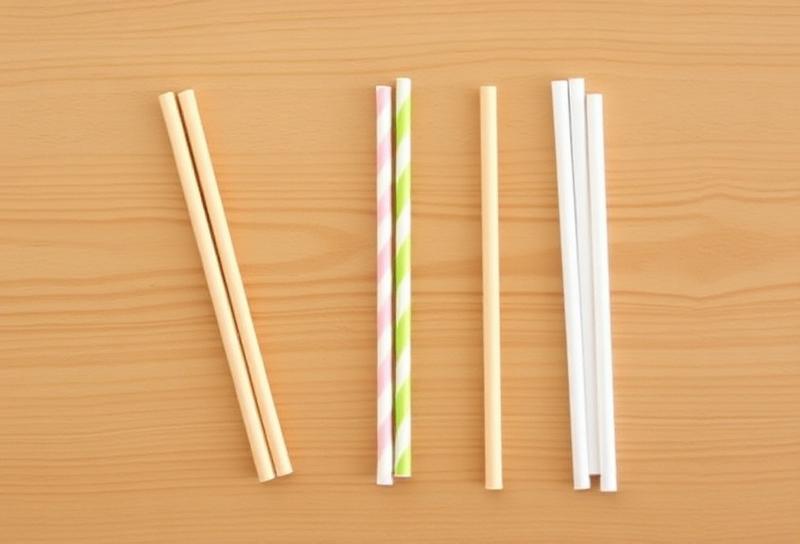
Sugarcane straws are made from bagasse — the fibrous pulp left behind after sugarcane stalks are crushed to extract their juice. It is a genuine agricultural by-product produced in enormous volume by the sugar industry, which is part of the appeal: the raw material already exists, and using it for food service diverts fibre that would otherwise be waste or fuel.
Structurally, bagasse is plant cellulose plus lignin and hemicellulose — the same broad family of materials as paper, wood and every other plant fibre. That matters, because it is the reason the material can be digested by the microorganisms in a compost pile. There is no fossil-derived polymer in the wall of the straw to be left behind.
Compostable, biodegradable, degradable: not synonyms
These three words get used interchangeably in marketing, and they should not be.
- Degradable only means the material breaks into smaller pieces. Conventional plastic is degradable in that sense — it fragments into microplastics and stays in the environment.
- Biodegradable means microorganisms can consume it, but says nothing about how long that takes or what is left behind. A biodegradable claim with no timeframe attached is close to meaningless.
- Compostable means the material breaks down into carbon dioxide, water and biomass within a defined period, under defined conditions, leaving no toxic residue and no visible fragments. It is the only one of the three that comes with a test standard behind it.
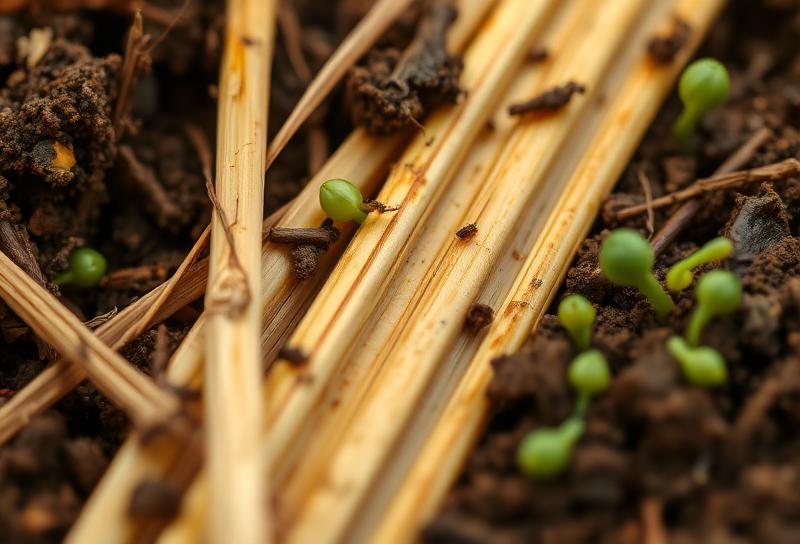
Our straws are TUV certified compostable and break down within 90 days in commercial composting conditions. Both halves of that sentence carry weight: the timeframe, and the conditions.
Why the conditions matter
Commercial composting is not a backyard bin. An industrial facility maintains elevated temperatures, controlled moisture, active aeration and a mature microbial population — conditions that accelerate breakdown enormously compared with a passive heap at the bottom of a suburban garden.
That is why the honest answer to "can I put this in my compost at home?" is: it will break down, but expect it to take considerably longer than 90 days, and expect it to work far better if you snap the straws into shorter pieces first, keep the heap damp and turn it. A certified commercial timeframe is a laboratory-verified figure under specified conditions, not a promise about every environment.
What certification actually tests
A compostability certification is not a single measurement. Testing regimes look at several things: how completely the material converts to carbon dioxide over the test period, whether it physically disintegrates so no recognisable fragments remain, whether the resulting compost is safe for plant growth, and whether heavy metals or other regulated substances are present above threshold.
In Australia, the standards you will see referenced are AS 4736 for industrial composting and AS 5810 for home composting. If a supplier tells you a product is compostable, asking which standard and which certifier is a completely reasonable question — and the answer should be immediate.
PFAS: the question people forget to ask
Moulded fibre food-service products have historically sometimes used per- and polyfluoroalkyl substances as a grease and moisture barrier. PFAS do not break down in a compost pile; they persist, and they end up in the finished compost. A product can be certified compostable in the sense that the fibre disappears while still carrying additives you would rather not spread on soil.
Our straws are PFAS-free. If you are auditing your packaging, ask every fibre-based supplier the same question in writing.
What this means for your venue
Three practical takeaways. First, compostable straws only deliver their environmental benefit if they reach a composting stream — a certified straw in landfill is a missed opportunity, so it is worth checking whether your council or a commercial organics collector services your area. Second, ask for certification, not adjectives. Third, do not overclaim to your own customers: "certified commercially compostable, breaks down in 90 days" is accurate and defensible, and it will hold up if someone checks.
The science here is not complicated, and it does not need to be oversold. Sugarcane straws are plant fibre. Plant fibre composts. The certification simply proves that this particular plant fibre does it within a useful timeframe and leaves nothing behind that should not be there.